Achilles Tendinitis in Runners: Causes, Treatment & Prevention
Achilles tendinitis is a gradual, load-related irritation of the tendon that connects your calf muscles to your heel bone, and in most runners it settles once you cut back the load that caused it and treat it properly. Whether you can keep running depends on how the pain behaves, so below you'll find how it differs from a rupture, the four common causes, when to run and when to rest, how to treat and prevent it, which shoes help, and the red flags that mean seeing a doctor.Pain you keep running through is how a small niggle turns into months on the sidelines. I've coached plenty of runners through exactly this, and it rarely means what you fear it means. Act early and it usually responds well, and I'll also answer the shoe question I get asked more than any other.
What Is Achilles Tendinitis (and How Is It Different from a Rupture)?
Your achilles tendon connects your calf muscles to your heel bone, and it takes a hammering every time you push off the ground. Ask it to do more than it can comfortably manage, and it starts to complain. It tightens. It aches. Sometimes it burns. That gradual, load-related ache is achilles tendinitis — irritation and overload of the tendon (often called tendinopathy), not a structural failure.There's one distinction that matters more than any other here. A sudden "pop" or snap in your achilles — sharp pain out of nowhere, or a sudden inability to push off or rise onto your toes — is not tendinitis. That's the signature of a ruptured achilles, and it needs same-day medical attention, not a wait-and-see approach. Tendinitis builds gradually over days or weeks. A rupture happens in an instant. Know the difference, and you'll know which one you're dealing with.
What Causes Achilles Tendinitis?

You increase your mileage too quickly. Push your weekly mileage up faster than your body can adapt, and your achilles — along with the rest of your connective tissue — has to work harder than it's ready for. Increasing your mileage safely is worth reading properly before your next build-up.
You do too much speedwork. Speedwork is brilliant fun, and I'm not telling you to give it up. But pile on too much of it without a proper warm-up and cool-down, and you're loading your achilles well beyond what easy running demands.
You're doing more hill work than your achilles is ready for. Climbing takes your ankle through a bigger range of movement with every stride, and steep descents add heavier impact forces than flat running does.
You overpronate. When your arch collapses too far inward as your foot lands, it changes the angle your achilles has to work at — and that mismatch is thought to contribute to some achilles tendon injuries, though the evidence is mixed.
Should You Keep Running on It?
Can you keep running with achilles tendinitis? It depends entirely on how bad it is — and the honest answer nobody really wants is: sometimes yes, sometimes no. Here's how I calibrate it with the runners I coach.| What you're feeling | What to do |
|---|---|
| Mild tightness that eases within the first kilometre | Carry on, but scale back your hill work and speedwork, and keep monitoring it |
| Pain that persists through the whole run, or worsens as you go | Stop. Move straight to the treatment protocol below |
| Morning stiffness lasting more than 30 minutes, or pain when you rise onto your toes | Rest from running entirely until it clears |
How to Treat Achilles Tendinitis
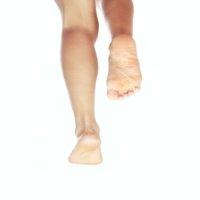
But symptom relief alone won't fix achilles tendinitis. The exercise that genuinely rebuilds the tendon's tolerance to load is progressive eccentric loading — heel drops done a specific way, not the casual version most runners have already tried.
First, work out where your pain sits. Pain in the middle of the tendon (mid-portion) responds best to straight-knee heel drops: stand on a step with your knees straight, rise onto your toes, then lower your heel slowly below the level of the step. Pain right at the back of your heel (insertional) needs bent-knee heel drops instead — and here's the trick: don't drop your heel below the level of the step. Dropping too low at the insertion point compresses the tendon against your heel bone, which is exactly what you're trying to avoid.
Do three sets of fifteen reps, twice a day. As it gets easier — and this is the bit most runners skip — progressively add load. A loaded backpack works well, or move to a single-leg version. Build this up over a full twelve weeks, not just the week or two it takes for the pain to ease off. Stopping early is the single biggest reason this protocol fails.
Once you're consistently pain-free, ease back into full training with a graduated return-to-running protocol rather than jumping straight back to your old mileage.
Preventing It
Prevention comes down to the same four causes, run in reverse. Follow a sensible, progressive mileage programme. Limit your hill work if you're prone to achilles trouble. Check your shoes properly (more on that below). And keep doing the heel-drop routine above two or three times a week even once the pain's gone — it's what keeps your achilles resilient long-term, not just what fixes it once.I used to live in the Netherlands — about as flat a country as you'll find anywhere, so hardly any hills to overdo. On holiday in Tuscany, though, I couldn't resist the hills, and after a longer hilly run my achilles was always the first thing to tell me it was time for a rest day. Beware — hills change the demands on the achilles, with climbing and steep descents both taxing it in different ways, and it catches even experienced runners out.
For the broader picture beyond just your achilles, it's worth reading up on preventing overuse injuries generally.
What Shoe Should You Run in with Achilles Tendinitis?
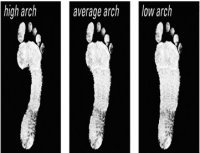
What actually holds up? Comfort. The shoe that feels right the moment you try it on is, time and again, the best predictor of which pair keeps you running injury-free — better than any arch-height chart.
A proper gait check at a specialist running store, or filming your own running and reviewing it, tells you more than eyeballing your arch in a mirror ever will. Arch height can still be one data point a good fitter weighs up — it does tie back to the overpronation cause I mentioned earlier — but treat it as the start of a conversation, not a prescription.
One more thing: however you land on a new pair, bring it in gradually. Alternate your new shoes with your current pair for a week or two rather than switching outright on day one. A sudden change to your movement pattern is itself a risk factor for achilles tendinitis, so don't trade one cause for another.
When to See a Doctor (Red Flags)
Most achilles tendinitis settles with the self-care above. But get it looked at properly if you notice any of the following: a sudden pop or snap, or you genuinely can't rise onto your toes (the possible rupture I flagged earlier — same-day medical attention, not wait-and-see); no improvement at all after two to three weeks of consistent self-care; pain that's there constantly rather than only when you're running; or visible swelling or a change in the shape of the tendon itself.None of these are reasons to panic. They're reasons to get a professional opinion instead of guessing. For the full rundown of red-flag symptoms across running injuries, it's worth knowing what applies beyond just your achilles too.
Frequently Asked Questions
Can you keep running with achilles tendinitis?
It depends on severity — see the "should you keep running" section above for the calibration.
What's the best shoe for achilles tendinitis?
There's no single arch-height rule that reliably predicts the right shoe — the old high-arch-means-neutral, low-arch-means-stability model is disputed in current research. Comfort at try-on, a specialist gait check, and a gradual shoe transition matter more than arch type alone.
How long does achilles tendinitis take to heal?
Mild cases can settle in a few weeks with rest, ice, and the eccentric heel-drop protocol above. If it hasn't improved after 2-3 weeks of consistent self-care, see a doctor.
What's the difference between achilles tendinitis and a ruptured achilles?
Tendinitis is a gradual ache or tightness that builds under load. A rupture is a sudden pop or snap with an inability to push off — a medical emergency, not a self-care situation.
Achilles tendinitis is frustrating, but it's rarely serious, and it responds well once you treat it properly and give it the time it needs. Stay consistent with the loading protocol, sort your shoes out properly, and you'll be back to full training without it lingering. :)
Some Other Pages You May Like
About the author

Dominique de Rooij (Dom)
Advanced Running Coach certified by Athletics Australia with 20 years of writing about running and over a decade coaching runners — from first-timers to marathoners. Dom's beginner programs have guided thousands of runners and been praised above plans from Jeff Galloway, Hal Higdon, and Runner's World. Now over 50, Dom still loves trail running, parkrun, and the coffee after.
Free weekly coaching • Join 3,500+ runners
Train Smarter, Not Just Harder
Get your free guide when you join the BRT Coaching Letter
No spam, ever. Unsubscribe in one click, any time.
What's New?
-
Cut 90 Seconds Off Your 1.5 Mile Run for the Army Test
Cutting 90 seconds off a 1.5 mile run in 3-4 weeks for the Army test: Dom breaks down realistic pacing to reduce 10:32 toward sub-9:00 for Paras selection. -
Improve Your 1.5 Mile Running Time to 10:30: Shin Splints
From 12:59 to 10:30 for 1.5 miles: Coach Dom's shin-splint fix and training plan to improve your running time in 2-3 months. -
Training for a 1.5 Mile Run - How to Qualify For Your Test
Coach Dom's 3-step plan for 1.5 mile run training: build aerobic base, add strides, then tempo and pace work to hit your test time.