Heart Rate So High When You Run? Here's Why (And When to Actually Worry)
"I'm just beginning to run — I started a Walk/Run program a little while ago. But I think there's something wrong: my heart rate when walking at a good pace is 140, and when I run it reaches 177. Is this normal? I'm not running fast at all — if I slow down any further, I'm walking.
– Rob, Toronto
Answer by Dominique: Hi Rob,
Thanks for writing in.
If you're new to running, a heart rate that jumps well above what the effort seems to justify is normal — and expected. A brisk walk can already feel like hard running in heart-rate terms. An untrained heart works harder to do the same job, and that gap closes as fitness builds. It's rarely a sign anything is wrong.
A friend of mine, who'd recently taken up running, came to me with exactly the same worry. Whether he was running slow, easy, or at tempo effort, his heart rate barely changed — and it stayed high throughout. It only climbed higher still when he ran intervals.
I'll break my response down as follows:
1. What's Actually Going On: Why a Beginner's Heart Rate Runs High
2. Is This Something to Actually Worry About?
3. What Can You Do About Your High Heart Rate?

1. What's Actually Going On: Why a Beginner's Heart Rate Runs High
Your heart is a muscle, just like any other — and like any muscle, it needs training. An untrained heart hasn't yet learned to pump strongly, so it works harder, and beats faster, to do the same job an experienced runner's heart does with ease. That's the single biggest reason behind your numbers, Rob, and it's an extremely common issue for beginning runners.A few other things can push your heart rate higher still, on top of the beginner effect — not instead of it:
- Heat and humidity make your heart work harder to help cool you down, even at an easy effort.
- Dehydration thickens your blood slightly, so your heart has to beat faster to move it around.
- Poor sleep the night before a run leaves your cardiovascular system starting from behind.
- Psychological stress or nerves about a new activity can raise your heart rate before you've even started running.
2. Is This Something to Actually Worry About?
It's natural to wonder whether a number like this means something's wrong. Here's how I'd tell the difference — and to be clear, this is triage, not diagnosis. If anything in the right-hand column below sounds like you, it's worth a prompt conversation with a doctor rather than trying to manage it yourself.Normal — Keep Going
- The number comes back down within a few minutes of easing off or stopping.
- No chest pain, dizziness, or unusual breathlessness during or after.
- The gap between your walking and running heart rate gradually narrows over the weeks as your fitness builds.
Worth Checking With a Doctor Promptly
- Chest pain or pressure.
- Dizziness or fainting.
- A fluttering or skipped-beat sensation.
- Breathlessness that feels out of proportion to the effort — especially with a family history of heart disease.
3. What Can You Do About Your High Heart Rate?

First, check yourself: does your pace feel easy and comfortable? If not, slow down further — even if that's very close to walking speed. That's fine, and it may need to stay that way for a while. You told me yourself that if you slow down any more, you're walking — for now, that's exactly where you should be. The goal is a comfortable, conversational pace.
As your fitness builds, you'll find your heart rate doesn't climb nearly as much for the same effort.
It's also worth checking your equipment. A heart rate monitor isn't always accurate, and can miss sudden changes in activity. Despite advances in technology, a chest strap is still far more reliable than a wrist-based pulse check — a sudden spike can sometimes be a monitor artefact rather than a genuine jump in your heart rate.
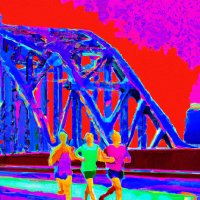
I suspect that as your fitness improves, your high heart rate during exercise will slowly settle down.
But if you're ever concerned about your heart rate, or you have an underlying health condition, it's worth a conversation with a healthcare professional. They can help you build a safe, effective plan around your individual needs.
You can read much more on the Heart Rate Monitor Training page. And if you're after a structured walk/run plan, I'll humbly point you to one of my own — Beginners Running Program 3 gets you to 30 minutes of non-stop running in 12 weeks, and it's a popular, successful program.
Hope this helps, Rob.
Kind regards,
Dominique
P.S. Is this looking more like overtraining than a normal beginner adjustment — worried this is overtraining instead? Or does your heart rate climb later in the run, rather than staying high throughout — heart rate climbing later in a run instead?
Some Other Pages You May Like
About the author

Dominique de Rooij (Dom)
Advanced Running Coach certified by Athletics Australia with 20 years of writing about running and over a decade coaching runners, from first races to marathons. Dom created PlanMyRace, a training plan generator for any race from 1500m to the marathon. Now over 50, Dom still loves trail running, parkrun, and the coffee after.
Stop Guessing.
Train for Your Best Race.
PlanMyRace builds a personalised, week-by-week training plan for any race from 1500m to the marathon, around your race date, your current fitness and the week you actually have.
Get My Free Plan →No credit card needed. Your full first week is free.
What's New?
-
Cut 90 Seconds Off Your 1.5 Mile Run for the Army Test
Cutting 90 seconds off a 1.5 mile run in 3-4 weeks for the Army test: Dom breaks down realistic pacing to reduce 10:32 toward sub-9:00 for Paras selection. -
Improve Your 1.5 Mile Running Time to 10:30: Shin Splints
From 12:59 to 10:30 for 1.5 miles: Coach Dom's shin-splint fix and training plan to improve your running time in 2-3 months. -
Training for a 1.5 Mile Run - How to Qualify For Your Test
Coach Dom's 3-step plan for 1.5 mile run training: build aerobic base, add strides, then tempo and pace work to hit your test time.